Copyright © Cloud Software Group, Inc. All Rights Reserved


Chapter 3 Processes : Business Process Modeling

Business Process Modeling
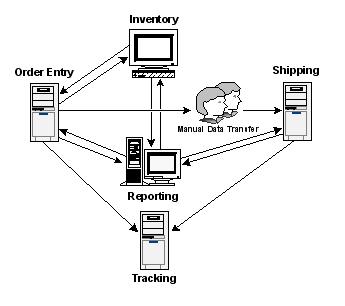
Most businesses choose the best application or environment for processing each component of their core business. In a typical enterprise, the flow of information and processing between each application is what drives the day-to-day operations of the business. For example, the order-entry application receives and processes orders based on availability information taken from the inventory system. The tracking system relies on order information and shipping information. Also, accurate and up-to-date reporting information is required from all systems.
Figure 12 illustrates an example enterprise computing environment with various systems running in different environments.
Figure 12 An example enterprise computing environment
 
Many companies implement the business rules that tie the systems together using custom-written code or by manual processes. Tying together different systems from different vendors that run in different environments is a labor-intensive and error-prone process that usually takes months of planning and implementation. Also, because the task of creating the custom business logic is so complex, businesses often rely on manual, paper-based processes instead of automating the process for greater efficiency.
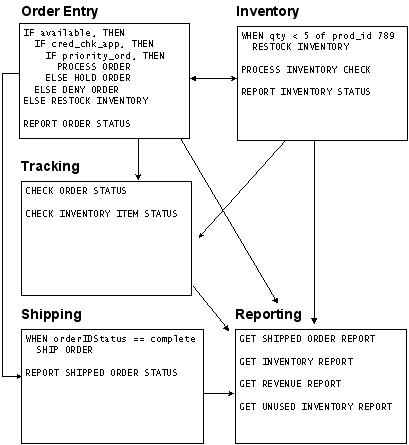
Figure 13 illustrates a business process flow, sometimes known as a workflow, that describes the business rules between the various systems in an enterprise.
Figure 13 A business process flow of an example enterprise
The business process flow describes an integrated enterprise that contains order-entry, inventory, shipping, tracking, and reporting systems. Each of these systems have rules for processing incoming data and more rules for passing data between the systems. These rules are characterized by business processes, such as the REPORT SHIPPED ORDER STATUS process in the shipping system.
These business rules in themselves can involve complex processing and automating these processes is crucial to lowering the total cost of operating the complete enterprise environment.
TIBCO ActiveMatrix BusinessWorks Solves Enterprise Integration Problems
An ideal solution for handling business process automation would be a tool that can handle the different environments and applications and allow you to create programmatic business rules easily. That tool should also allow you to automate your business processes for the greatest efficiency.
TIBCO ActiveMatrix BusinessWorks allows you to model business processes with a graphical tool. You can use the TIBCO ActiveMatrix BusinessWorks process definition palette to diagram complex business logic easily. Once the business rules have been specified, TIBCO ActiveMatrix BusinessWorks can execute the business processes, allowing you to easily automate the critical functions of your business.
TIBCO ActiveMatrix BusinessWorks can help you specify the business logic and automate the processing of the interaction between the systems in your enterprise. This allows you to reduce the time to implement an integrated, enterprise-wide computing environment and ultimately lower the cost of deploying and maintaining the system.

Copyright © Cloud Software Group, Inc. All Rights Reserved