Understanding Outbound Calls Using SOAP/HTTP
The following diagram provides a high level overview of how the components of the iProcess Web Services Plug-in interact with the other applications during outbound calls over SOAP/HTTP. The numbers on the diagram correspond to the subsequent explanations.
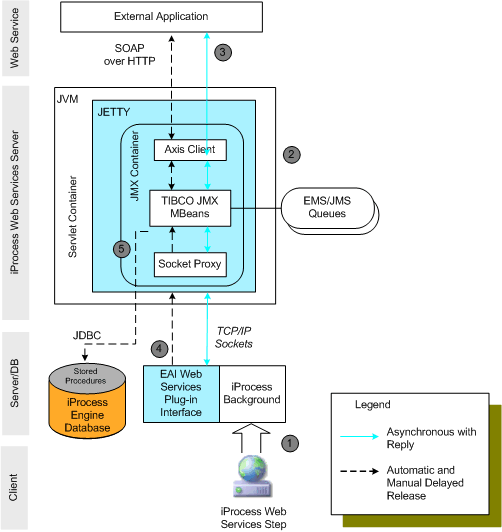
| 1. | Asynchronous with Reply - A iProcess Web Services Step communicates with the EAI Web Services Plug-in Interface, which sends its request to the Socket Proxy using TCP/IP Sockets. |
| 2. | The request is sent to TIBCO Java Management Extensions (JMX) MBeans, which uses TIBCO Enterprise Message Service/JMS queues for its internal operations. It is then sent to the Axis client. |
| 3. | The Axis client sends the request to the external application using SOAP over HTTP. The reply is sent back via the same route as described for the outbound call. |
| 4. | Automatic and Manual Delayed Release - the outbound call proceeds in the same way as previously described for outbound Asynchronous with Reply. |
| 5. | The reply depends on the invocation style: |
| — | For a Manual Delayed Release step, the reply is initiated from an external application. |
| — | For an Automatic Delayed Release step, the release is accomplished by using JDBC to connect to the iProcess database to run a stored procedure. |
| — | For an Asynchronous with Reply step, the external application responds directly to the iProcess background. |